September 10, 2026
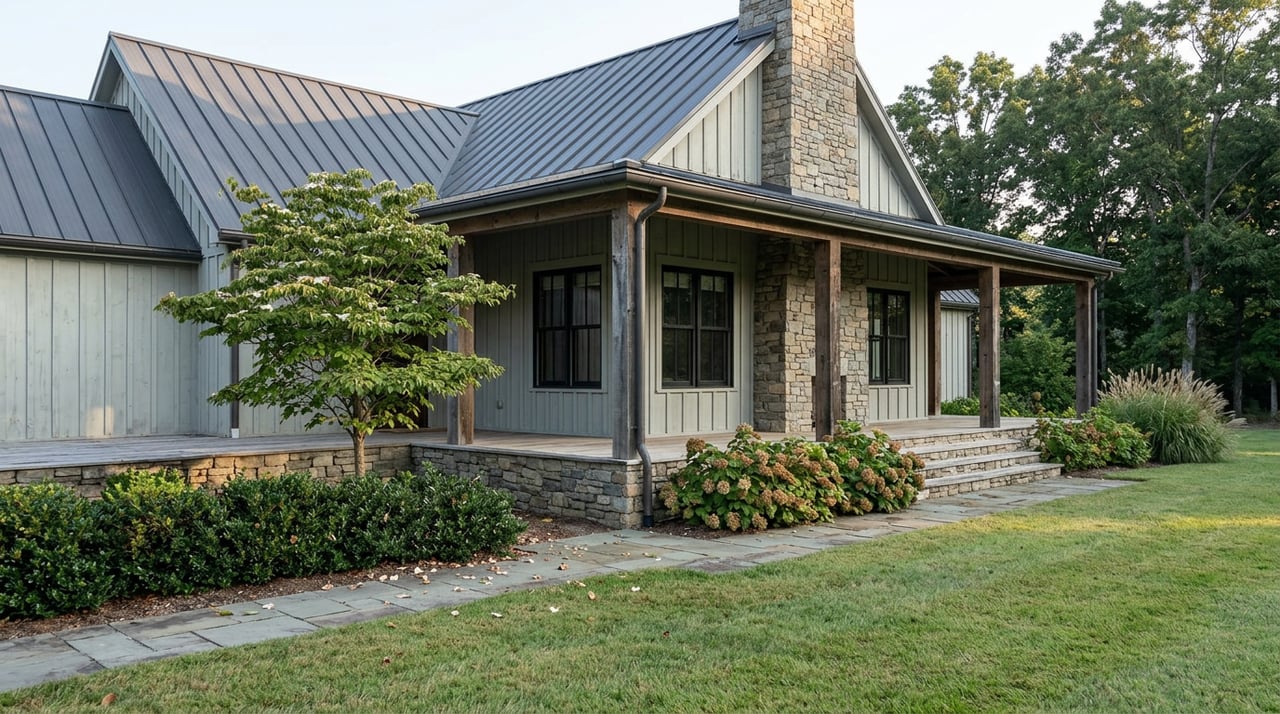
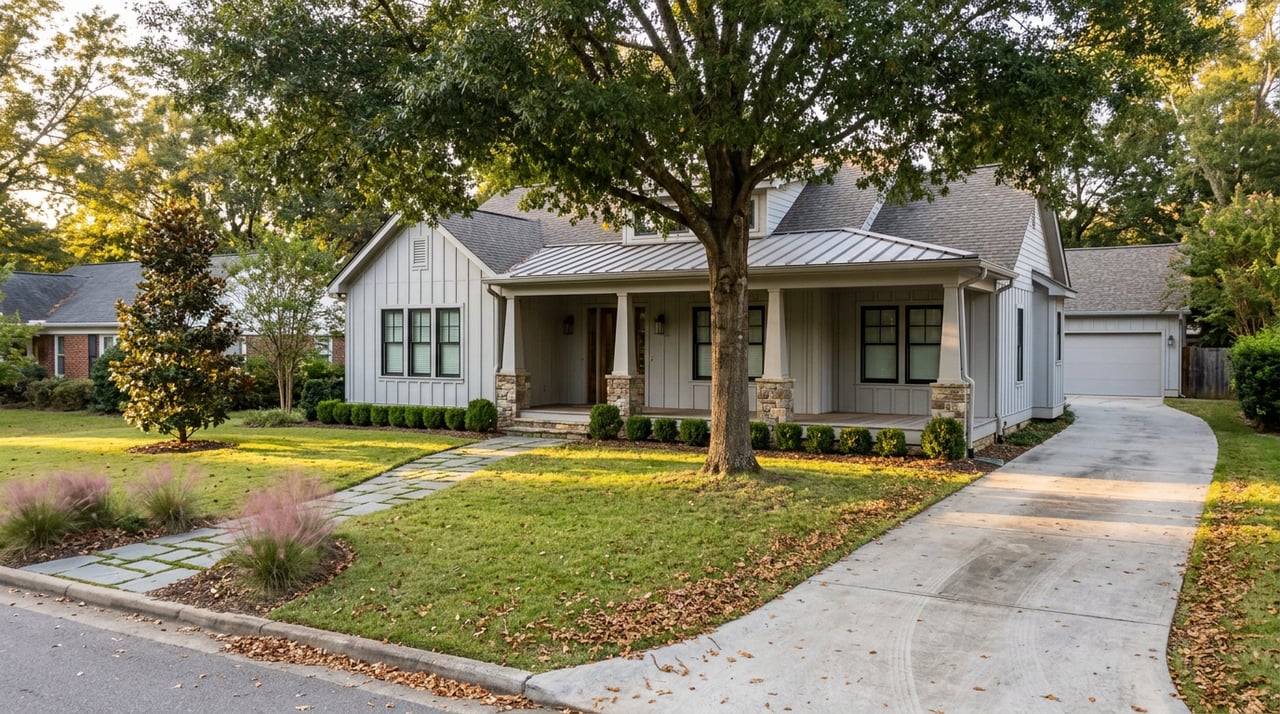
Pull up two new-construction listings in Simpsonville priced within a few thousand dollars of each other and you will sometimes find yourself looking at two different products. One sits on a quarter acre with a neighbor's fence line close enough to touch. The other sits on close to an acre and a half with room to spare on every side. Nothing on the listing explains why. The floor plans look similar. The finishes look similar. The price is nearly identical. The lot is not.
The gap isn't random, and it isn't really about the builder either. It traces back to a Greenville County ordinance most buyers have never heard of, one that was written to slow growth and instead redrew the map of where growth happens.
In January 2024, Greenville County Council gave final approval to an ordinance restricting new septic systems in the roughly 60 percent of the county that remains unzoned. Any residential development of 10 or more lots relying on septic in those areas now has to sit at a minimum of one and a half acres per home, a sharp step up from the quarter- and third-acre lots that had become common in unincorporated growth corridors. News coverage of the final vote noted the rule was aimed squarely at southern Greenville County, where subdivisions had been outpacing the roads, schools, and water systems built to support them.
Council added a wrinkle that matters for anyone trying to gauge whether this is a passing phase or a permanent feature of the market: a two-year sunset clause requiring the body to vote again on whether to keep the rule. That vote would have come due in early 2026. According to Septicandwell.com, current county septic permitting guidance still lists the 1.5-acre minimum as the active standard, which tells you the restriction survived its own expiration date rather than quietly disappearing.
Nine months in, county staff pulled the numbers, and the result contradicted both the fears and the hopes attached to the rule. Between January and July 2024, developers still brought forward 14 major subdivision applications totaling close to 800 units on roughly 300 acres, a pace that was actually a bit faster than 2023. Septic use overall barely budged. What changed was where it was allowed to happen: only one of those 14 applications was in an unzoned area, and that Post and Courier analysis found roughly 79 percent of new developments in the first half of 2024 connected to existing sewer infrastructure, compared with about 83 percent across all of 2023, a share that had been trending down before the rule took hold.
Read plainly, the ordinance didn't stop Greenville County from growing. It stopped growth from spreading evenly. Builders kept building at close to the same clip, but they redirected toward parcels already wired into a sewer main, because that is now the only place a developer can put 10 or more homes without eating the cost of 1.5 acres apiece. Land without sewer access didn't stop selling. It just stopped being where the dense, moderately priced new construction goes.
You can watch the sorting happen at the intersection of Fork Shoals Road and West Georgia Road, just outside Simpsonville's city limits. Three developments approved for that corridor in early 2024 tell the story in miles and acres. Valley Cove Farms, the largest of the three, was cleared to bring 371 homes to a 280-acre tract that had been in the same family for more than two centuries. Cedar Shoals added 206 homes on 76 acres nearby, and Cades Mill brought another 120 homes to a 47-acre parcel just to the north.
All three were tied into existing sewer service, which is precisely why they could move forward as dense, standard-lot subdivisions rather than 1.5-acre septic tracts. The developer working that stretch of road told the Post and Courier at the time that any additional building beyond what was already approved would require the sewer system itself to expand first, since the county's new septic restrictions closed off the cheaper workaround. That comment captures the mechanism at work: sewer access isn't just a utility hookup, it's the gatekeeper for how much of a growth corridor can actually get built out at production-home density.
Simpsonville itself has also invested in infrastructure inside city limits. The city secured close to $10 million toward rehabilitating the Lower Reedy Basin sewer system, work its administration described at the time as necessary to give the city reliable capacity for continued growth rather than aging clay pipe that leaks under pressure.
New development is also underway. Along Buck Creek Road, Simpsonville Commons is in an active second phase, with a Wawa under construction, an expansion of the KCC manufacturing facility, and plans for additional retail buildings, all adding hundreds of thousands of square feet of commercial space to a corridor where development is continuing. On Hunter Road, Tricon Simpsonville is building a 93-unit build-to-rent community of three-bedroom townhomes with a pool, dog park, pickleball and tennis courts, and an amphitheater, a project expected to reach completion by September 2026. That land already sits on sewer, which means it can absorb density that unincorporated septic-served land legally cannot.
The city isn't growing for free either. In April 2026, staff warned council that rapid growth is straining services faster than tax revenue is keeping pace, floating a fee increase that would run about $48 a year on a $300,000 home in the fire service area. That's the other side of the ledger: sewer-served land gets the density and the amenities, but it also gets the bill for maintaining the roads and services that density demands.
The practical upshot for a buyer weighing new construction around Simpsonville is that "new" doesn't mean one thing. Before comparing price per square foot across two listings, it helps to know which side of the infrastructure line each one sits on.
None of this makes one option better than the other. A septic-served 1.5-acre lot and a sewer-served quarter acre are simply different products wearing similar price tags, and knowing which one you're looking at before you write an offer saves a conversation you don't want to have during due diligence.
If you're comparing an established septic-served neighborhood to something newer nearby, the newer sewer-served option may carry a different density and price structure than what you're used to.
Is septic a dealbreaker? Not at all. Plenty of well-maintained septic systems serve homes for decades. The point is to treat it as a known variable rather than a surprise, factor in the inspection, and understand what a 1.5-acre minimum means for how much company you'll have in a future phase.
Comparing new construction around a growing Upstate city means comparing more than finishes and floor plans. It means understanding which side of a sewer line a property sits on, because that line, more than the builder's brand or the model name, is quietly deciding what you're actually buying.
If you're weighing options across Simpsonville's growth corridors and want someone who can walk the infrastructure story alongside the listing sheet, The Light Realty is glad to help. Schedule Your Concierge Consultation and let's find the lot that actually matches what you're picturing.
This article is general information, not legal, tax or financial advice. Consult a qualified professional about your situation.
Stay up to date on the latest real estate trends.
Get In Touch With Our Team To Learn More