October 1, 2026
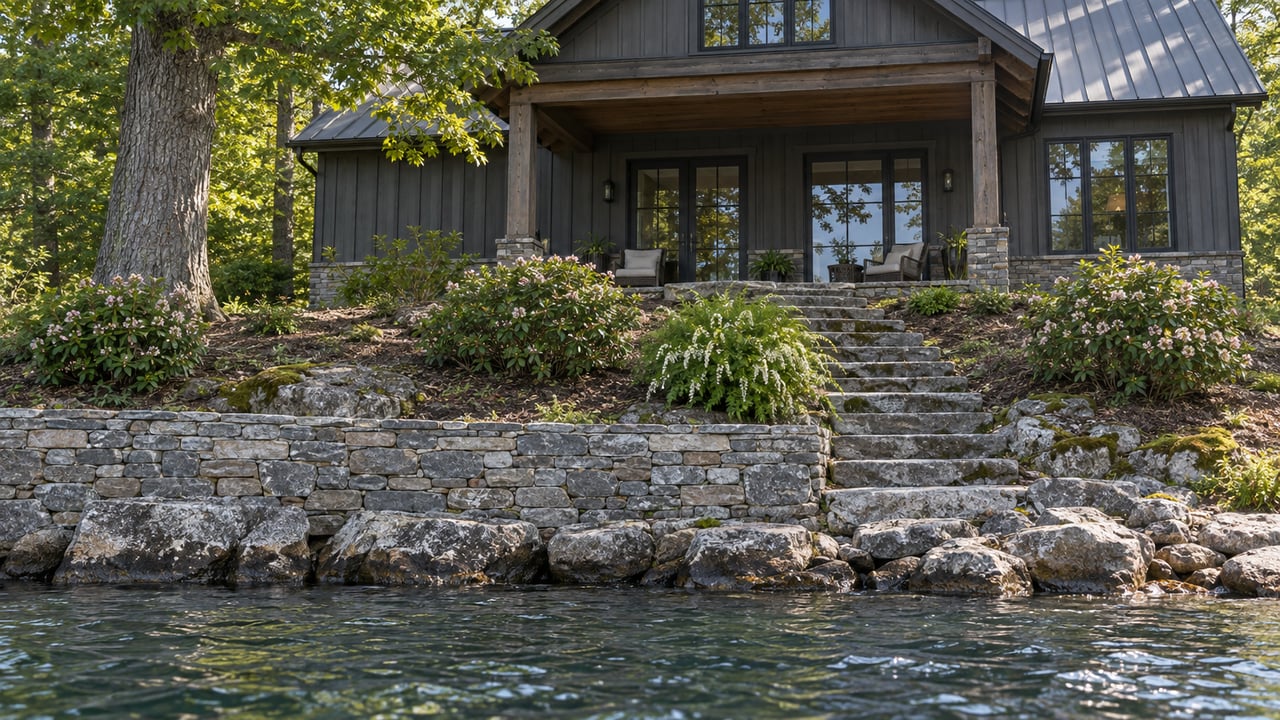
Two listings on Lake Lure can carry the same asking price this year and put a buyer in two entirely different relationships with the water. One comes with a deed that touches the shoreline and a permitted private dock. The other comes with a golf-cart ride to a marina, a line item in an HOA budget, and a view of the lake from across a cove. Both get called "lakefront" in the marketing copy. Only one of them lets you walk out your back door and step onto a boat.
That distinction matters more this year than it has in a while, because Lake Lure itself spent much of 2026 catching up to its own listings.
Lake Lure is not a natural body of water left alone to rise and fall on its own schedule. The Town manages it directly, releasing water through Tainter gates and a reservoir drain valve to hold the lake at a full-pond elevation of 990.5 feet above sea level. That control cuts both ways. It protects property from flood surges, and it also means the lake can sit well below the number in a listing's marketing photos for extended stretches while the Town works on it.
Hurricane Helene forced exactly that kind of stretch. The dam's spillway rebuild was projected to wrap in February 2026, with the Town beginning to refill the lake immediately after and targeting a return to full pond by May 2026, according to the Town of Lake Lure's own January 2026 update. A new boat ramp and fueling dock at Washburn Marina were part of that same rebuild, replacing structures the storm destroyed, with a temporary utility building standing in until a permanent one goes up.
None of that shows up in a listing photo taken at full pond on a sunny afternoon. It shows up when you ask the seller's agent a question most buyers don't think to ask: when did water last reach this specific dock, and for how long has it been sitting at that level? A cove that filled back in April behaves differently, for insurance, for dock inspection, for your first season of actual boat use, than one that reached full pond in June.
The Town's own guidance draws a line that real estate marketing tends to blur. "Waterfront" on Lake Lure splits into at least three ownership structures, and the gap between them is the whole story for anyone comparing prices across listings.
| What you're actually buying | Typical yearly cost tied to that access | Recent asking prices seen at this tier |
|---|---|---|
| Deeded shoreline with a permitted private dock | HOA can be modest. Riverbend, a gated community with two private lakes along the Broad River, runs $650 a year | Listings this year ranged from roughly $373,000 for a smaller dockable cottage to $2,350,000 for a finished waterfront estate with its own boathouse |
| Resort-adjacent lot with no direct frontage | Rumbling Bald Resort access runs $3,911 a year regardless of lot size, and buys golf, tennis, a wellness center, private beach, and marina access by short boat or golf-cart ride | A bare 1.5-acre buildable ridge lot listed at $5,000, an occupied home across the cove from the lake listed well into six figures, both carrying the same dues |
| Frontage still working through this year's refill | Same dues structure as above, plus timing exposure on when the water actually arrived | Varies by cove, worth confirming before writing an offer |
A $595,000 lot on Mirror Lake within Riverbend, carrying 290 feet of waterfront and that same $650 annual HOA fee, sits closer in spirit to the first tier than to anything at Rumbling Bald, even though both get marketed under the same "Lake Lure waterfront" heading. The number on the sign tells you almost nothing about which of these three products you're actually being shown. The deed and the HOA declaration tell you everything.
Owners on Lake Lure frequently notice their boat lift losing clearance and assume the lake is low. The Town's own materials point to a different, more mundane cause most of the time: shoreline sedimentation building up under docks and boathouses, which reduces depth even when the lake sits at full pond. Property owners are permitted to excavate that buildup themselves, without Town Council approval, as long as the correction stays within 12 inches of full pond.
The deeper structural work, seawall repair and stabilization, is a different matter. The Town periodically schedules winter drawdowns, historically 3 to 5 feet below full pond, to give property owners a repair window for that kind of work. Those windows come around roughly every three years, and the Town has been explicit that owners only get that opportunity that often.
For a buyer, this turns into a due diligence question rather than a curiosity: when was the seawall on this specific property last inspected or repaired, and is a drawdown-dependent repair already overdue? A dock that looks shallow on your first showing might need nothing more than an afternoon with a local excavation contractor. A seawall showing cracks or shifting is a different conversation, and one that depends on the Town's next scheduled drawdown rather than on anything the seller can fix before closing.
Buyers underwriting a Lake Lure property as a short-term rental have two new things to check this year. The first is financial. One recently marketed lakeside rental unit disclosed its own gross rental income in its listing materials: just over $44,800 in 2023, dropping to roughly $42,800 in 2024 in what the listing itself described as a Helene-shortened season, then falling to about $34,800 in 2025, the year the lake sat closed. The same listing set its expectations for 2026 against a fully reopened lake. That progression is a useful reminder that a rental pro forma built entirely on pre-Helene numbers, or even on 2025 numbers, may not reflect what a fully operational lake supports.
The second change is regulatory. Under the 2026 Lake Use Regulations, vacation rental management companies must now register and commercially permit non-motorized boats, kayaks and paddleboards included, the same way they've already had to for motorized craft. Any buyer planning to furnish a rental with paddle equipment as an amenity needs to build that registration step into the operating plan, not discover it after the first guest complaint about a missing permit sticker.
A single price figure from a portal search may combine listings from all three ownership tiers, including properties still working through this year's refill. It cannot tell you whether a specific listing gets you a private dock, a deeded resort membership, or a shoreline that only recently came back up to full pond. That distinction lives in the deed, the HOA declaration, and a conversation with the Town about the property's specific cove, not in the price itself.
Does every Lake Lure address marketed as "waterfront" come with a private dock? No. Some carry deeded shoreline and dock rights. Others carry resort or HOA access to a shared marina without touching the water at all, and the marketing language does not always make the difference obvious.
Is Lake Lure back to a normal full-pond level as of this year? The Town targeted a return to its 990.5-foot full-pond mark by May 2026, following the dam spillway rebuild that wrapped that February. Confirming when a specific cove reached that level this season is a fair question to bring to a showing.
If a dock looks like it's losing water depth, does that mean the lake is low? Not necessarily. The Town's own guidance points to shoreline sedimentation as the more common cause, correctable by the owner within a 12-inch threshold without needing Town Council approval.
If you're weighing a Lake Lure property against something on Lake James, Lake Wylie, or one of the golf communities further into the Blue Ridge foothills, the ownership tier and the drawdown history matter more than the number on the listing sheet. The Light Realty works both sides of that comparison every week and can walk a specific address through its deed, its dues structure, and its water history before you decide it's worth an offer.
This article is general information, not legal, tax or financial advice. Consult a qualified professional about your situation.
Stay up to date on the latest real estate trends.
Get In Touch With Our Team To Learn More