
September 10, 2026
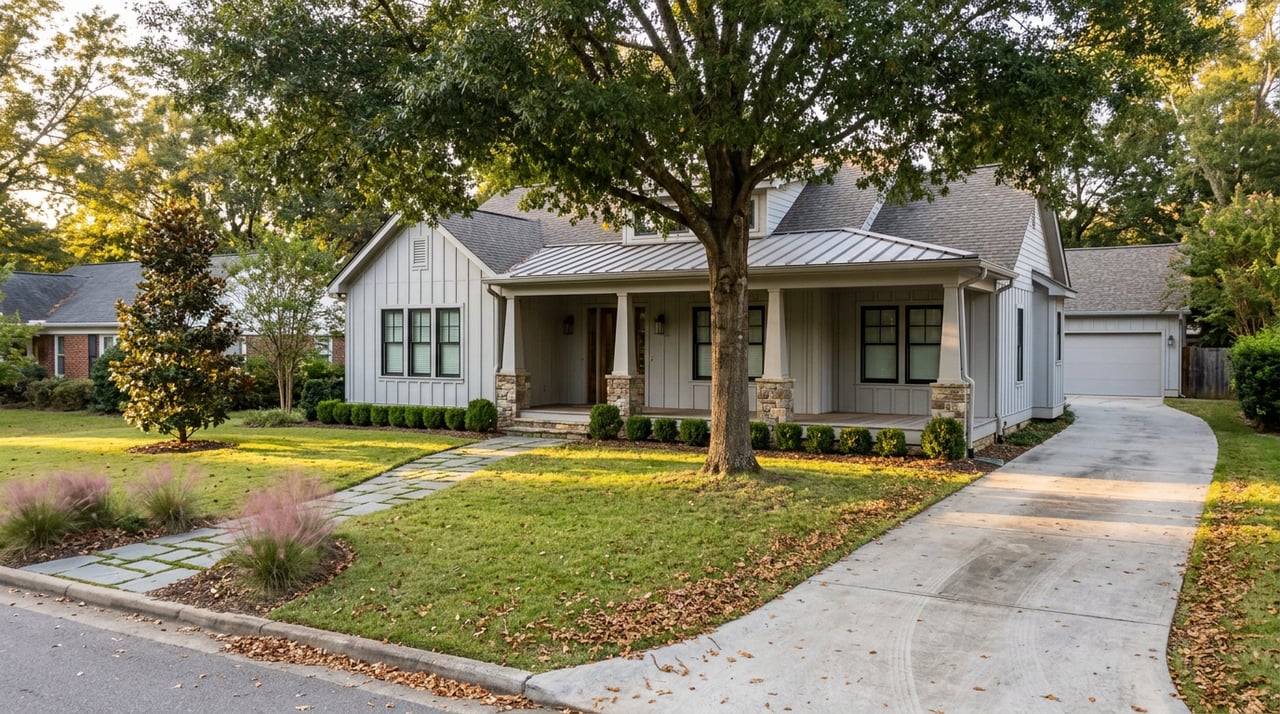
A buyer relocating for a job near GSP airport recently had two Greer listings pulled up side by side. Same square footage, same asking price, a few blocks apart. The first thing her lender asked wasn't about the kitchen or the roof. It was which county the house sat in. She didn't know the answer, and neither did the listing photos.
That question turns out to matter more in Greer than almost anywhere else in the Upstate, because Greer is not entirely inside one county. It never has been.
Greer's city limits stretch across two counties. Roughly six in ten addresses inside the city sit in Greenville County. The rest, closer to four in ten, fall in Spartanburg County. That split is baked into the town's history, not a recent annexation quirk, and it means a Greer mailing address tells you almost nothing about who collects your tax bill, which school levies you pay into, or which treasurer's office you'll be calling if something looks wrong.
Cross that line and the paperwork changes with it. Greenville County properties get billed and assessed through the Greenville County Tax Collector. Spartanburg County properties answer to the Spartanburg County Treasurer instead. School operating levies differ depending on whether a home is zoned into Greenville County Schools or one of Spartanburg's districts. None of this shows up as a checkbox on a portal listing. These details can be checked before closing and considered when comparing homes.
For a buyer comparing two nearly identical Greer homes on price alone, checking the county and school details is an important first step. Other factors can affect the bill, too.
Here's the part that surprises people even after they've confirmed which county a Greer property sits in. Even within the Spartanburg County portion of the city, tax data shows a meaningful spread between neighboring zip codes, and the spread runs in a direction most buyers wouldn't guess.
Comparing the two zip codes that carry a Greer address on the Spartanburg County side, one shows a median effective property tax rate of about 1.62 percent, while the other sits closer to 0.88 percent. A buyer skimming those two numbers would assume the first zip code produces the bigger tax bill. It doesn't.
| Higher-rate zip | Lower-rate zip | |
|---|---|---|
| Median effective tax rate | ~1.62% | ~0.88% |
| Typical annual bill | ~$612 | ~$1,761 |
The zip code with the higher rate carries the smaller typical bill, because the homes there tend to carry lower assessed values. The zip code with the lower rate produces the bigger bill, because the homes are worth more. The rate alone tells you almost nothing about what you'll actually owe each year. What matters is the rate applied to the specific home you're buying, not the zip code average, and definitely not the county-wide figure a portal displays next to the listing price.
This is the piece that a median-price search misses entirely. Two buyers shopping the same budget in Greer can land in tax situations that don't resemble each other at all, and the address alone won't warn them.
Layer the City of Greer's own budget cycle on top of the county split and the picture gets one more twist. For the fiscal year that closed this past June, the city cut its municipal millage rate by two mills, from 113.0 down to 111.0, after the city administrator reported that citywide assessed values had climbed 15 percent. Cutting the rate while values rose sharply still left the city collecting more revenue per mill than the year before.
For the fiscal year that began this July, city council held the millage rate flat at 111.0 mills. On paper, that reads like no change for homeowners. In practice, per-mill property tax revenue for the city was projected to rise again, because reassessment keeps pushing the base value higher even when the rate itself doesn't move. During the budget process, members debated cutting the rate further, one proposing a two-mill reduction and another a one-mill reduction, but both amendments were voted down, and the $91.5 million budget advanced on a 5 to 2 vote in its first reading.
The lesson for a buyer comparing homes isn't about city politics. It's that a flat millage rate is not a promise of a flat tax bill. If the underlying assessed value of the specific property you're buying is climbing, so is your bill, rate or no rate change. Ask what a property's assessed value has done over the past two reassessment cycles, not just what today's millage rate says.
Two Greer neighborhoods make the pattern concrete. O'Neal Village, the newer mixed-use community off S.C. Highway 101, is zoned into Greenville County Schools, with families assigned to Skyland Elementary, Greer Middle, and Blue Ridge High. It's the kind of neighborhood a relocating family often finds first, because it's newer, closer to Highway 101, and marketed as a self-contained community with its own amenities.
Sugar Creek, an established subdivision built through the 1970s and 80s on the east side of Greenville County within the city, is also zoned into Greenville County Schools, but into a different cluster entirely: Riverside High, Northwood Middle, and Buena Vista Elementary. Two homes, both zoned to the same county school district, can still land in different school operating levies depending on which subdivision they're in. County alone isn't the finish line for figuring out a tax bill. School zone matters just as much, and it doesn't always track neatly with the neighborhood's build year or price point.
Downtown Greer, centered on Trade Street and Greer City Park, sits in its own layer again, inside the city limits and therefore subject to that municipal millage on top of whatever county and school levies apply. A downtown bungalow a short walk from Trade Street's restaurants isn't just paying for walkability. It's paying city rates that a home a mile outside the city limits, in unincorporated county land, simply doesn't owe.
The employers that make Greer attractive in the first place, the BMW manufacturing plant, the Inland Port, GSP airport itself sitting inside city limits, don't sit inside any one of these tax lines. A short commute to any of them is available from homes in Greenville County, Spartanburg County, inside city limits, and outside them. Proximity to a job doesn't tell you anything about the tax line you're crossing to get there.
Does a Greer mailing address guarantee Greenville County Schools? No. Depending on the exact parcel, a Greer address can be zoned into Greenville County Schools or into a Spartanburg County district. The county GIS parcel lookup or the school district's own zoning tool will confirm it for a specific address.
Buying in Greer means buying into a city that never fit neatly inside one set of tax boundaries, and the details that determine your actual bill live in parcel records and school zoning maps, not in the median price a search tool shows you. A local agent who checks the county line, the school zone, and the assessed value history before you write an offer is doing work that a listing photo simply can't.
If you're weighing a move to Greer, or comparing it against other Upstate towns, The Light Realty can walk the parcel-level details with you before you make an offer. Schedule Your Concierge Consultation and get the full picture, not just the median.
This article is general information, not legal, tax or financial advice. Consult a qualified professional about your situation.
Stay up to date on the latest real estate trends.
Get In Touch With Our Team To Learn More