August 13, 2026
Open three browser tabs for Lake Lure real estate and you will get three different answers to a simple question. One site pegs the typical home at $414,665, a figure that has climbed 5.1% over the past year. Another shows single-family listings running at a median of $585,000 in August 2026, with a median value of $285 per square foot. A third, filtered to waterfront-only inventory, shows 222 waterfront homes for sale at a median listing price of $620,000. None of these numbers is wrong. They are measuring different slices of a market that has quietly split in two since the fall of 2024, and understanding why matters more than knowing which number to believe.
| Source | Snapshot | What it reports | What it's actually measuring |
|---|---|---|---|
| Movoto | August 2026 | $585,000 median list price | All active single-family listings, blended |
| Redfin (waterfront filter) | Dated May 2, 2026 | $620,000 median list price | Waterfront-only, 222 active listings |
| Redfin (all sales) | August 2025 | $450,000 median sale price | Closed sales that month, one year ago |
| Zillow (ZHVI model) | Automated estimate | $414,665 typical value | Modeled valuation across all home types |
Part of this is methodology. List price is not sold price. A modeled valuation like Zillow's ZHVI smooths over the estimate rather than reporting a single month's closings. A waterfront-only filter will always skew higher than a blended citywide number simply because it excludes the inland inventory. That much would be true in any lake market in the country, and if that were the whole story it wouldn't be worth a blog post.
The deeper reason is that Lake Lure's inventory right now genuinely falls into two distinct pools, and no single median can honestly represent both.
Hurricane Helene tore through western North Carolina on September 27, 2024, and the flooding that followed left the marina gone, Town Hall gutted, the dam compromised, and the lake itself closed. The National Weather Service recorded 19 inches of rain falling west of the lake, causing water levels to rise sharply by the morning of September 26, and the situation grew serious enough that the dam's 124-foot barrier was entirely overtopped, prompting evacuation orders for about 1,600 residents downstream. Crews eventually pulled more than 1.2 million tons of sediment and debris out of the lake basin, a cleanup that took over a year.
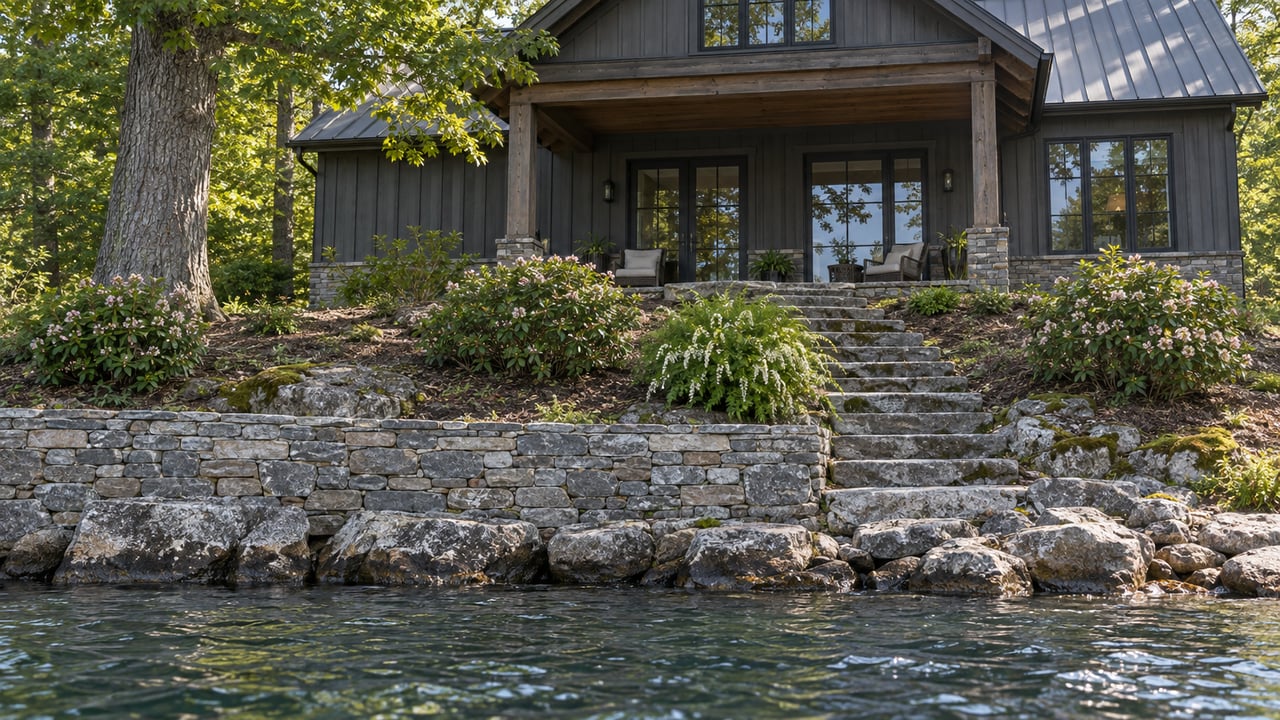
That backdrop is the actual variable driving the price split. Properties where waterfront access, dock infrastructure, and marina services have already been confirmed and restored are pricing with real confidence, which is why the waterfront-only median sits meaningfully above the blended citywide figure. Properties still waiting on infrastructure milestones, or carrying unresolved storm-related complications, are pricing at a discount and sitting on the market longer. Combine those two pools into one median and you get a number that describes neither group accurately, which is exactly what's happening across the portals right now.
A handful of dates explain almost everything about where a given Lake Lure property sits in this split:
A property near the marina carries a premium for more than the view. That premium also reflects certainty about a specific completion date, which is worth real money in a market where the alternative is still an open question.
The $450,000 median sale price for all closed sales in August 2025 and the $620,000 waterfront median listing price measure different things. You can't attribute that difference to lake frontage alone. When comparing specific properties, look at genuine finished infrastructure versus a promise on a town calendar.
That has a practical implication for how you structure an offer. Ask for the specific milestone date the town has published for dock access or marina slips and tie your due diligence period to it. If a seller points to July 2026 marina completion as a selling point, confirm whether that milestone was actually met rather than assuming a summer listing photo reflects current reality.
It also means checking a property's permitting history more carefully than you might elsewhere. A pre-offer conversation with your agent about whether a specific parcel has any open enforcement history is worth the extra day it takes.
Waterfront access does carry a documented premium in lake markets generally. Industry data on smaller, independent lakes puts navigable water access at adding at least $100,000 in value. Lake Lure's current figures show a wider numerical gap than that baseline, though they compare different measures; the recovery timeline is one factor behind the difference.
The town is marking its centennial this September, with a celebration planned on the water. That's a milestone worth noting for what it signals rather than what it promises. A town confident enough to plan a public celebration on the lake is a town further along in recovery than it was a year ago, and the days-on-market data backs that up: Movoto's August 2026 figures show homes spending a median of 129 days on the market, a 10 percent decrease from August 2025, suggesting the market is beginning to move a little faster as certainty returns.
None of this means the recovery is finished. It means a buyer who understands exactly where a given property sits on this timeline has a real advantage over one who is simply comparing sticker prices across portals.
Should I wait until the marina is fully finished before buying near Lake Lure? Not necessarily. Waiting has a cost too, since properties near confirmed infrastructure are already pricing in that certainty. The better move is confirming the actual completion status of the specific milestone tied to the property you're considering, rather than waiting for the whole recovery to be declared complete.
Why does the waterfront-only median look so much higher than the citywide median? Because it excludes inland inventory entirely and captures a segment where dock and marina access are largely resolved. Comparing a citywide blended number to a waterfront-only filter is comparing two different populations of homes, not two prices for the same thing.
Does the dam's status affect all Lake Lure properties, or just waterfront ones? The dam replacement design is still in progress, and its resolution matters most directly to properties with lake frontage and marina proximity. Inland properties are affected mainly through the town's broader infrastructure and tax base rather than through direct water access.
If you're weighing a purchase in Lake Lure and want a read on where a specific property sits relative to these recovery milestones, The Light Realty works both sides of the North Carolina and South Carolina line and can walk you through exactly what's confirmed versus what's still on the calendar. Schedule your concierge consultation to start with the facts on the ground rather than a single median from a portal.
This article is general information, not legal, tax or financial advice. Consult a qualified professional about your situation.
Stay up to date on the latest real estate trends.
Get In Touch With Our Team To Learn More