May 14, 2026
If you are deciding between Tryon and Landrum for an equestrian home base, you are not choosing between horse country and non-horse country. You are choosing between two towns that sit in the same Carolina Foothills riding corridor, but offer a different feel for daily life, property style, and access points. This guide will help you compare the two through a practical lens so you can narrow in on the setting that fits how you want to live and ride. Let’s dive in.
Tryon and Landrum both have strong ties to the regional horse community, but they present that identity in different ways. The Town of Tryon directly names the Tryon Riding & Hunt Club, Tryon Hounds, FETA, and FENCE as part of its equestrian identity. Landrum’s official city history also points to horse farms and equestrian activities throughout the community and region.
In simple terms, Tryon tends to read as the deeper horse-country anchor. Landrum often feels like the practical small-town South Carolina base that still keeps you connected to the same equestrian ecosystem. For many buyers, that distinction matters just as much as acreage or barn space.
If your top priority is living in the middle of the area’s horse culture, Tryon often has the edge. The town’s official identity is closely tied to long-standing equestrian institutions, and Polk County zoning adds another layer by explicitly including Equestrian and Equestrian Village districts. That can be meaningful if you are targeting a property that supports a true horse-centered use.
Tryon also sits close to some of the region’s best-known equestrian anchors. FENCE offers 384 acres with 5.5 miles of hiking and riding trails, and horse trail access there is limited to FETA members. The broader horse culture is reinforced by organizations like Tryon Hounds, which describes a seven-month riding-to-hounds season in Polk County and northern Spartanburg County.
For buyers who want a home that feels immersed in the region’s riding identity, Tryon can feel more integrated into that lifestyle. That does not make it the right answer for everyone, but it often rises to the top for buyers who want trail access, training density, and a stronger horse-town feel in daily life.
Landrum gives you access to the same general equestrian corridor while offering a slightly different day-to-day rhythm. Its official city history places it just west of I-26 between Spartanburg and Asheville, and notes that horse farms and equestrian activity are evident throughout the area. That makes it a realistic option if you want to stay plugged into the riding scene without centering every part of your life around it.
For some buyers, Landrum’s biggest advantage is convenience. If easy I-26 access matters for commuting, travel, or regular trips across the Upstate and Western North Carolina, Landrum can feel simpler. You still remain close to horse country, but with a small-town base that many buyers find easy to navigate.
This is often where relocation clients pause and think carefully about lifestyle. If you want a horse property but also expect to leave for business, travel to shows, or split time between states, Landrum may offer the kind of practical balance that helps your home work well year-round.
For many equestrian buyers, trail access is the deciding factor. In this area, that conversation usually starts with FETA. According to FETA, its trail network is privately owned, open only to members, and estimated at 125 to 150 miles across about 15 square miles of Hunting Country.
Membership is limited to residents, landowners, or people boarding horses in Polk County, Landrum, and Campobello. That means your location and property setup can directly affect how you use the trail system. If private riding access is high on your list, it is worth evaluating not just the home itself, but how it connects into this broader network.
FENCE adds another important layer, with its 384-acre property and horse trails that are only open to FETA members. Taken together, these details show why buyers often focus so heavily on trail relationships here. In this market, the right equestrian property is not just about the barn or fence lines. It is also about how your property fits into the riding landscape around it.
If showing, training, or event access is important to you, the Tryon area benefits from a major regional venue. Tryon International Equestrian Center in Mill Spring is located off Exit 170 on US 74 and hosts 12 or more equestrian disciplines annually. Those include dressage, driving, eventing, hunters, jumping, mounted games, para dressage, and vaulting.
That level of activity helps shape the larger market on both sides of the state line. Buyers who want quick access to a full competition calendar often look closely at homes in and around Tryon, Mill Spring, and Landrum for that reason. Even if you are not showing year-round, proximity to a major equestrian center can influence convenience, demand, and long-term fit.
A lot of buyers comparing Tryon and Landrum are really comparing property styles, not just town names. Two useful examples are Caroland Farms and Gowans Fort. They illustrate how different the equestrian living experience can be within the same broader region.
Caroland Farms functions more like a farm-and-trail district than a typical subdivision. Listing examples describe estate-sized parcels ranging from the high teens into the high 30s in acreage, with features such as custom barns, covered arenas, board-fenced paddocks, and access to private riding trails. One listing also referenced 13-plus miles of manicured trails and another noted a 10-minute drive to TIEC.
The clearest takeaway is that Caroland Farms tends to suit buyers who want a larger-scale, farm-first setting. If your vision includes more land, deeper trail integration, and a property that feels built around equestrian use from the ground up, this type of community may align well with your goals.
Gowans Fort presents a different type of opportunity. A current Landrum listing describes it as a 30-lot gated equestrian community with roughly 200 acres in a minimum 5-acre zoning district. That same listing noted a 10.5-acre lot and direct access to a two-mile riding trail system.
For some buyers, that format is appealing because it offers large homesites in a more structured setting. If you like the idea of equestrian living but want less land-management burden than a large private farm might require, Gowans Fort may feel like a better fit.
If you are weighing these styles of communities, the choice often comes down to three questions:
Those questions can be more useful than simply asking whether you prefer North Carolina or South Carolina. In this market, the right answer is often property-specific.
It is easy to focus on acreage, footing, and trail maps, but daily logistics can shape your experience just as much. The area benefits from strong equestrian support services on both sides of the line. Tryon Equine Hospital provides 24/7 emergency care and operates a 17,000-square-foot facility with medical, ICU, surgical, MRI, and ambulatory services.
For boarding and training, Renovatio Farms in Tryon describes itself as a full-service boarding and training facility on a 50-plus-acre farm. Clear View Farm in Landrum describes itself as a professionally managed equestrian center on 25 acres with training and lessons. Buyers who are not bringing a full private setup from day one often appreciate having these options nearby.
The area also offers in-market tack and apparel support through The Farm House, with a Landrum store and a Tryon International Equestrian Center store. During show season or while settling into a new property, that kind of convenience can make a real difference.
If you are still torn between Tryon and Landrum, focus on the way you plan to use the property. Tryon often makes the most sense if you want stronger horse-town identity, close ties to equestrian organizations, and a setting that feels more deeply rooted in the riding culture. Landrum often makes the most sense if you want small-town convenience, straightforward interstate access, and a practical launch point into the same regional horse scene.
It also helps to think beyond the first purchase. Your ideal setup may change based on whether this will be a primary home, second home, or relocation landing spot. A property that works beautifully for weekend riding may not be the same one you want for full-time horse care, regular training, or frequent competition travel.
That is where a detailed, property-by-property strategy matters. In a cross-state equestrian market like this one, the most important question is rarely just “Which town is better?” It is “Which location, community, and setup best fits the life you want to build?”
If you are exploring Tryon, Landrum, or both, The Light Realty can help you compare properties through a concierge, cross-state lens so you can choose with clarity and confidence.
Stay up to date on the latest real estate trends.

Back-to-school real estate tips for home buyers and sellers in Greenville SC and Western North Carolina from The Light Realty
The school year brings new schedules, fresh routines and a different perspective on home. Here’s what buyers, sellers and relocating families should consider as summer… Read more
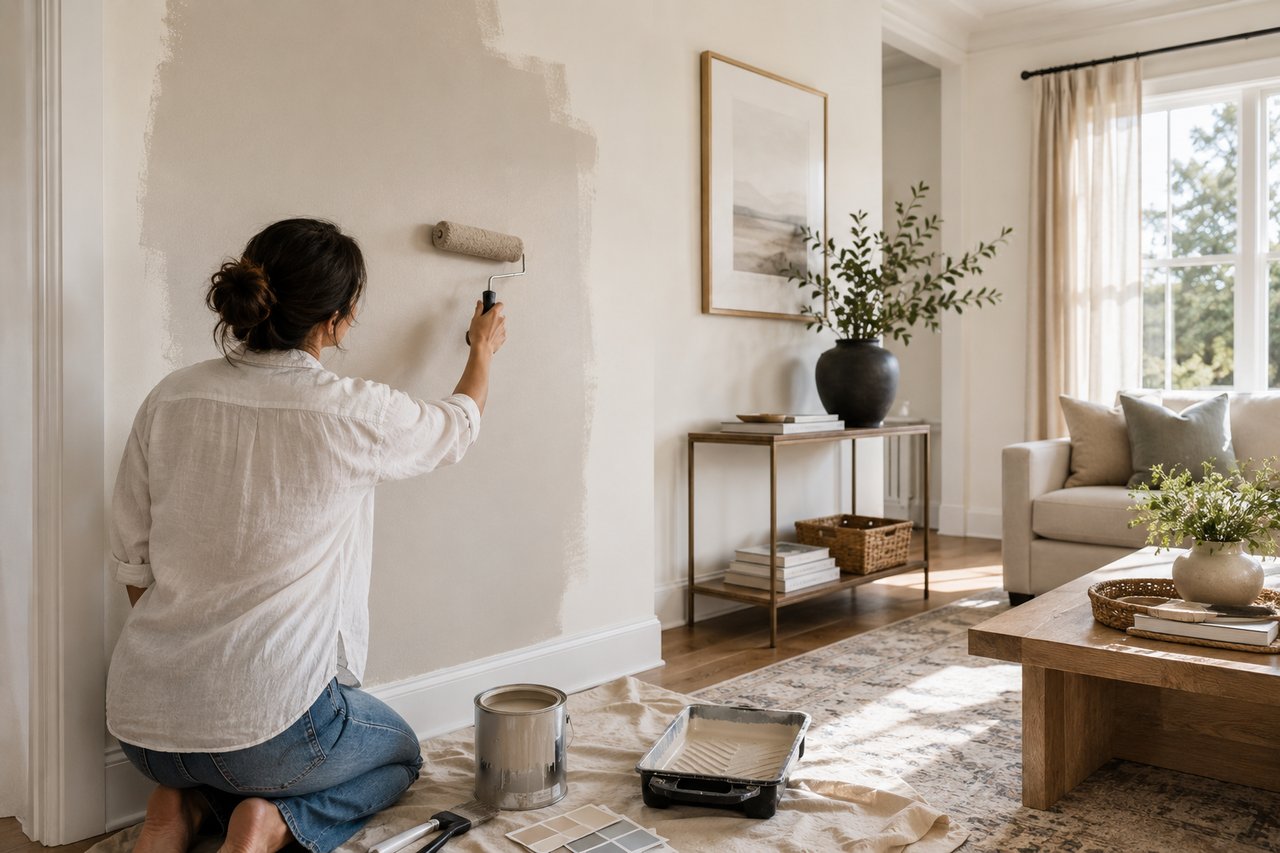
home improvements before selling
Small, strategic improvements can change how buyers experience your home online, from the curb, and the moment they walk through the front door.
Get In Touch With Our Team To Learn More