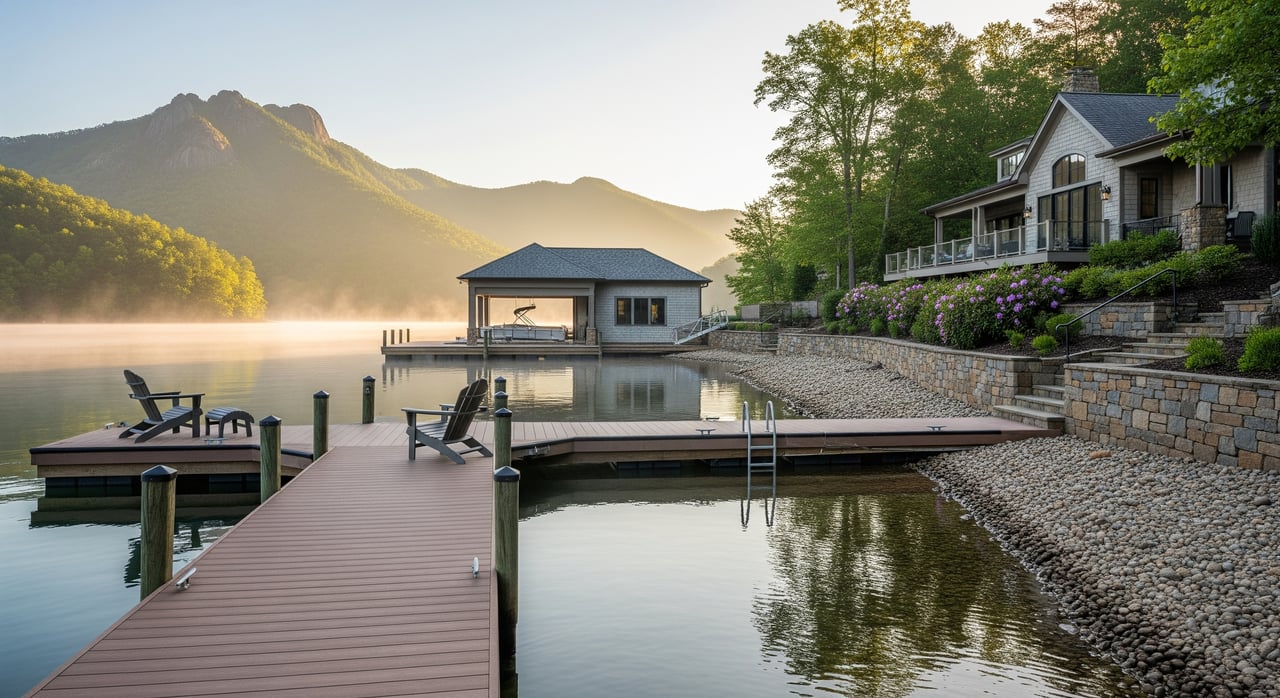
Picture your morning coffee on the dock, water lapping at the pilings, a boat ready for a slow cruise. Buying waterfront on Lake Lure can deliver that lifestyle, but the details behind docks, shorelines, and access can be more complex than they look in a listing. You want to protect your investment and avoid surprises that delay closing. In this guide, you will learn how docks and shoreline rules work at Lake Lure, what permits and approvals to expect, what access actually conveys, and how to set smart contingencies so you buy with confidence. Let’s dive in.
Lake Lure waterfront basics
Lake Lure sits in Rutherford County with a mix of private shorelines, HOA communities, and public amenities. Each parcel can have different rules, covenants, and histories. You should not assume what you see at the water’s edge is legal, transferable, or allowed to be modified without approvals.
Waterfront ownership includes riparian or littoral rights, which generally allow you to use the water fronting your parcel, subject to state and local rules and any recorded easements. The exact boundary can be defined by the deed, recorded plats, and the ordinary high water mark. A licensed surveyor is the professional who can map those boundaries accurately before you close.
Deeds and plats matter. So do easements. A shared path to the lake or a party wall dock agreement might be recorded, or it might not be clear. Ask for copies, read them closely, and verify how the shoreline and access are actually structured.
Docks and boathouses 101
Different structures carry different permitting and maintenance needs. Here are the common types you will see at Lake Lure:
- Floating dock: A platform on pontoons. Often the simplest option with fewer environmental impacts.
- Fixed or pile dock: Supported by pilings driven into the lakebed. More permanent, often requires stronger permitting and engineering.
- Boatlift: Attached to a dock to lift a boat out of the water. Typically treated as an accessory to an existing permitted dock.
- Boathouse or enclosed boathouse: A roofed or enclosed structure over a slip. These are highly regulated because of footprint, visibility, and shading impacts.
- Shared or community docks: Owned by an HOA or shared between lots. Rules for use and maintenance are usually spelled out in covenants or easements.
Buyers should expect limits on dock length and width, setbacks from neighbor lines, and restrictions on covered, enclosed, or multilevel structures. Some communities prohibit boathouses entirely and require shared or community docks. Ask for the rules in writing and confirm the enforcement history.
Approvals and permits in Lake Lure
Shoreline work and docks involve layered oversight. Your process will depend on the scope of work, location, and parcel history. Planning ahead saves time and headaches.
Who to contact first
Start with these authorities and stakeholders when researching a parcel:
- Town of Lake Lure for local ordinances, boat rules, setbacks, and public dock policies.
- Rutherford County Planning and Inspections for zoning, building permits, and land-disturbance or erosion control requirements.
- North Carolina Department of Environmental Quality for water quality and shoreline guidance, including sedimentation control.
- U.S. Army Corps of Engineers if you plan any dredging, fill, or work that could affect wetlands or waters of the United States.
- Applicable HOA or lake association for covenants, dock committees, slip assignments, and architectural approvals.
Typical permitting steps
Most projects follow a version of this sequence. Always confirm your exact steps with the Town, County, and state or federal agencies for your parcel.
- Confirm ownership and boundaries with a deed and current survey showing the shoreline and lot corners.
- Discuss your concept with Town of Lake Lure planning and Rutherford County to learn specific rules for length, setbacks, materials, and whether a boathouse is allowed.
- Check state and federal triggers. If you plan to place fill, drive pilings, or modify wetlands or the lakebed, you may need state and federal permits.
- Obtain any required environmental reviews. This can include a wetland delineation or engineered plans for steep slopes.
- Apply for local building permits and pay fees. If in an HOA, obtain written architectural or dock committee approval as required.
- Complete construction and pass inspections. Keep documentation and certificates of compliance for your records and for future buyers.
Common rules to expect
- Maximum dock length from the shore to protect navigation and habitat.
- Width and footprint limits that cap how much of the water surface you cover.
- Setbacks from property lines to avoid encroachment.
- Vegetation buffer protections and erosion control requirements during construction.
- Restrictions or prohibitions on enclosed boathouses and multilevel structures.
- Requirements for safer, non-toxic materials and best practices.
- Seasonal construction windows to protect water quality and wildlife.
Shoreline protection and vegetation
Natural vegetation along the shore stabilizes banks and improves water quality. Removing vegetation or regrading near the water can trigger review under erosion and sediment control rules. Shoreline stabilization ranges from soft solutions to harder armoring, each with different review standards.
Stabilization options
- Soft or bioengineered solutions: Vegetative buffers, live staking, and bioengineering methods that blend into the shoreline and typically face less scrutiny than hard armoring.
- Riprap or stone armoring: Rock placed along the shore to reduce erosion. Often requires permits and careful installation.
- Bulkheads or seawalls: The most engineered option and usually the most regulated. Expect more review and higher costs.
If you see riprap, walls, or recent earthwork, ask the seller for permits, approvals, and invoices. Past stabilization work can affect your future project options.
Erosion and sediment control
Land-disturbing activities like clearing, driveway cuts, or retaining walls can require sedimentation and erosion control measures under state and county rules. Plan for site fencing, silt controls, and inspections if your project exceeds local thresholds.
Access scenarios to verify
Not all “waterfront” lives the same. What conveys with your purchase drives your enjoyment, costs, and resale.
- Deeded private frontage: You hold riparian rights for your shoreline, subject to rules and approvals.
- Shared or party wall docks: Two or more owners share a structure and maintenance. Confirm the recorded agreement.
- Community or HOA docks: Ownership is held by the association, with rules for use and slip assignment. Ask about fees and waitlists.
- Easement-only access: An easement might allow you to reach the water but not to build a private dock. Clarify rights in writing.
- Lake view with off-site access: Some homes have views and access through a community facility rather than direct frontage. Verify what transfers.
Key questions include whether a slip conveys, how slips are assigned, whether there are planned assessments for dock replacement, and whether neighbor docks encroach into your setbacks. A boundary survey helps to confirm encroachments before closing.
Due diligence checklist for buyers
Put these items on your list to protect your investment and keep your timeline intact:
- Obtain a current boundary survey that shows the shoreline, lot corners, and any visible encroachments.
- Request from the seller all dock, boathouse, and shoreline permits, inspection records, and invoices for past work.
- Verify the permitted status of any existing dock or boathouse with the local permitting authority, and keep copies.
- Hire a qualified marine contractor or structural engineer to inspect docks, lifts, boathouses, seawalls, and riprap.
- Review HOA covenants, rules, and recent meeting minutes for dock policies, slip assignments, and pending assessments.
- Confirm septic and well function with inspections. Many waterfront lots rely on on-site systems.
- Review flood risk using FEMA flood maps and local ordinances, and secure insurance quotes early.
- If you plan changes, add a permitting feasibility review to confirm approvals are likely before you commit.
Smart contingencies in your offer
- Title and easement review, including HOA documents.
- Survey contingency to confirm boundary, shoreline, and encroachments.
- Permit verification contingency for any existing dock or boathouse.
- Structural inspection contingency for docks and shoreline stabilization.
- Septic and well contingencies where applicable.
- Insurance quote contingency, including flood.
- Access and slip confirmation contingency for community or shared facilities.
Costs and timelines you can expect
Budget and time are two of the biggest surprises for first-time lake buyers. Planning ahead keeps your project predictable.
- Floating docks: Often low-to-mid thousands of dollars depending on size and materials.
- Fixed or custom docks: Can range from mid-thousands to tens of thousands depending on length, site conditions, and build quality.
- Enclosed boathouses: Typically much higher due to structure, roofing, and utilities. These can run from tens of thousands to well into six figures for large or custom designs.
- Shoreline stabilization: Costs vary widely with slope, access, rock quantities, and permitting.
- Permits, surveys, engineering: Plan for several hundred to several thousand dollars depending on scope.
Timelines vary by scope and season:
- Local permits and reviews: A few weeks to a few months.
- State or federal approvals for dredging, fill, or wetlands: Often multiple months, and can run 3 to 12 months depending on complexity and any public notice requirements.
- Seasonal constraints: Over-water work and riprap delivery can be weather-dependent, and there may be seasonal restrictions for water quality or habitat.
- HOA approvals: Timing depends on committee schedules. Build in buffer time.
Always obtain at least two local quotes from experienced marine contractors. Lake work often costs more than similar inland construction due to access and environmental controls.
Pros you will want on your team
- Licensed land surveyor to confirm shoreline and corners.
- Real estate attorney to review title, easements, and deed language.
- Local planner or permit expediter to scope approvals and timelines.
- Marine contractor or dock builder with local experience.
- Structural or shoreline engineer for major docks, boathouses, or bulkheads.
- Environmental consultant if wetlands or special habitats are suspected.
- Septic and well inspectors to confirm system health.
- Insurance agent familiar with waterfront coverage and flood.
Local issues and trends to watch
Rules at Lake Lure and in Rutherford County can be stricter than general state standards. Confirm whether there are local ordinances for docks, no-wake areas, seasonal construction, or boathouse limitations. HOA covenants often set the tightest rules in lake communities, so review them early.
Compliance history matters. Municipalities increasingly ask for proof of permits when homes sell or when you remodel. An unpermitted dock may be a problem later. Ask for documentation now and keep copies for the future. Finally, evaluate flood insurance early so premiums and coverage do not become a last-minute surprise.
Your next step
Buying waterfront at Lake Lure is about lifestyle, but your purchase should also be grounded in smart due diligence. When you pair a current survey with permit verification, HOA review, and a seasoned marine contractor’s assessment, you minimize surprises and set yourself up for years of enjoyment.
If you want a concierge partner to orchestrate the moving parts, connect with The Light Realty. We help you clarify what conveys with each property, coordinate surveys and inspections, liaise with local permitting offices, and introduce trusted shoreline and marine pros. Our founder-led, white-glove approach serves both second-home buyers and relocating families who value clear guidance, discretion, and seamless execution.
Ready to start your Lake Lure search with confidence? Reach out to The Light Realty to Schedule Your Concierge Consultation.
FAQs
What should I verify before buying a Lake Lure home with an existing dock?
- Confirm the dock’s permitted status with the local permitting authority, obtain copies of approvals and final inspections, and have a marine contractor assess structural condition.
Do I need permits to build or modify a dock on Lake Lure?
- Most projects require local approvals, and some trigger state or federal permits if they involve dredging, fill, or impacts to wetlands or the lakebed.
Can my HOA rules override what the Town or County allows for docks?
- HOA covenants can be more restrictive than local ordinances, and you must comply with both sets of rules where they apply.
How long do dock or boathouse approvals usually take in the Lake Lure area?
- Local reviews can take weeks to a few months, while state or federal permits for in-water work can extend timelines to several months or more.
What are typical costs for docks and shoreline stabilization at Lake Lure?
- Floating docks are often in the low-to-mid thousands, fixed or custom docks run higher, and boathouses can reach six figures; stabilization costs vary by site and scope.
If a listing says lake access, does that mean I can build my own dock?
- Not necessarily; easement-only access may allow you to reach the water but not confer riparian rights to build a private dock.
How do I know where my shoreline boundary actually is?
- Order a current boundary survey that shows lot corners and the shoreline, and review it alongside the deed and any recorded plat.
What contingencies should I include for a Lake Lure waterfront purchase?
- Survey, title and easement review, dock permit verification, structural inspection of shoreline structures, septic and well checks, insurance quotes, and access or slip confirmation.